


The new year is here and everyone’s talking about goals, growth, building something bigger, but nobody’s talking about the thing that actually kills most founders before they ever fail at the business itself: loneliness.
Not the kind where you don’t have friends or family, the kind where you’re surrounded by people, but nobody actually gets what you’re going through. The kind where you have to have it all together in public, but behind closed doors you’re scared and alone and don’t know who you can actually talk to about it.
I remember sitting in my apartment a few years ago after a particularly brutal week, staring at my phone trying to figure out who I could call. I had friends, I had family, I had a team, but I couldn’t call any of them about what I was actually feeling because none of them would understand.
My friends would tell me to just quit if it was that hard. My family would worry and ask if I needed money. My team needed me to have answers, not doubts.
So I just sat there alone with it…

That’s the thing about being a CEO or a solo founder or the person who’s responsible for everything, it’s the loneliest role there is, and the worst part is, you’re so busy trying to keep everything from falling apart that you convince yourself you don’t have time to deal with it.
Loneliness isn’t just an emotional problem, it’s a business problem, and if you don’t address it, it will kill you before the business does.
“Our sense of loneliness is literally making us sick.” - Radha Agrawal, Founder and CEO of DAYBREAKER, Co-Founder of THINX
1. Here’s the thing you want:
You want to stop feeling like you’re the only one going through this.
You want people who actually understand what it’s like to carry the weight of a business on your shoulders, to make decisions with incomplete information, to feel responsible for other people’s livelihoods, to have everyone looking to you for answers when you’re not sure you have them.
You want someone you can be honest with about how hard this is without them telling you to just get a real job or move on or questioning whether you should even be doing this in the first place, and you want to feel less alone without having to sacrifice the time you don’t have or the focus you need to keep building.
2. Here’s how to do it:
When I was running a founders community and later working at Techstars, people thought we were selling funding or mentorship or connections to investors. Those things mattered, sure, but that’s not really what we were selling, we were selling community.
We were great at curating groups of people and putting them in rooms together, CEO lunches, COO meetups, founder cohorts where people who were going through the same shit could actually talk about it. The number one thing I heard from CEOs wasn’t “I need more capital” or “I need better advisors,” it was “there’s not enough time in the day” and “I don’t know who I can go to.”
That second one is the killer.
When you’re the CEO, you can’t just vent to your team about how scared you are or how uncertain you feel about the next six months, you can’t tell your investors you’re not sure this is going to work, and you can’t even really talk to your family or non-entrepreneur friends because they don’t get it, and their advice is usually some version of “just quit and get a stable job.”
So you end up carrying it all alone, and that isolation compounds over time until you’re burned out, making bad decisions, and questioning why you started.

Entrepreneurial loneliness hits different because it’s not often assuaged by non-entrepreneurs. It’s easy for friends or family who don’t get it to tell you to just quit and find something stable, but entrepreneurs know that’s not really an option. Being an entrepreneur is a lifestyle, and finding people who understand that changes everything.
“Being an entrepreneur can be a lonely journey, but if you manage to share it with other entrepreneurs who support you to learn and grow along the way, it will help you succeed.” - Lesley Waterkeyn, Founder and CEO of Colourworks
The first thing that worked for me was joining a founders community, not a networking event where everyone’s pitching each other but an actual community where people showed up consistently, shared honestly, and supported each other without expecting anything in return. At Techstars, the magic wasn’t the mentors or the demo day or the investor intros, it was the cohort. It was putting 10 CEOs in a room together every week where they could talk about the real stuff like the anxiety, the uncertainty, the fear of failing, the pressure of payroll, the loneliness of making decisions nobody else can make.
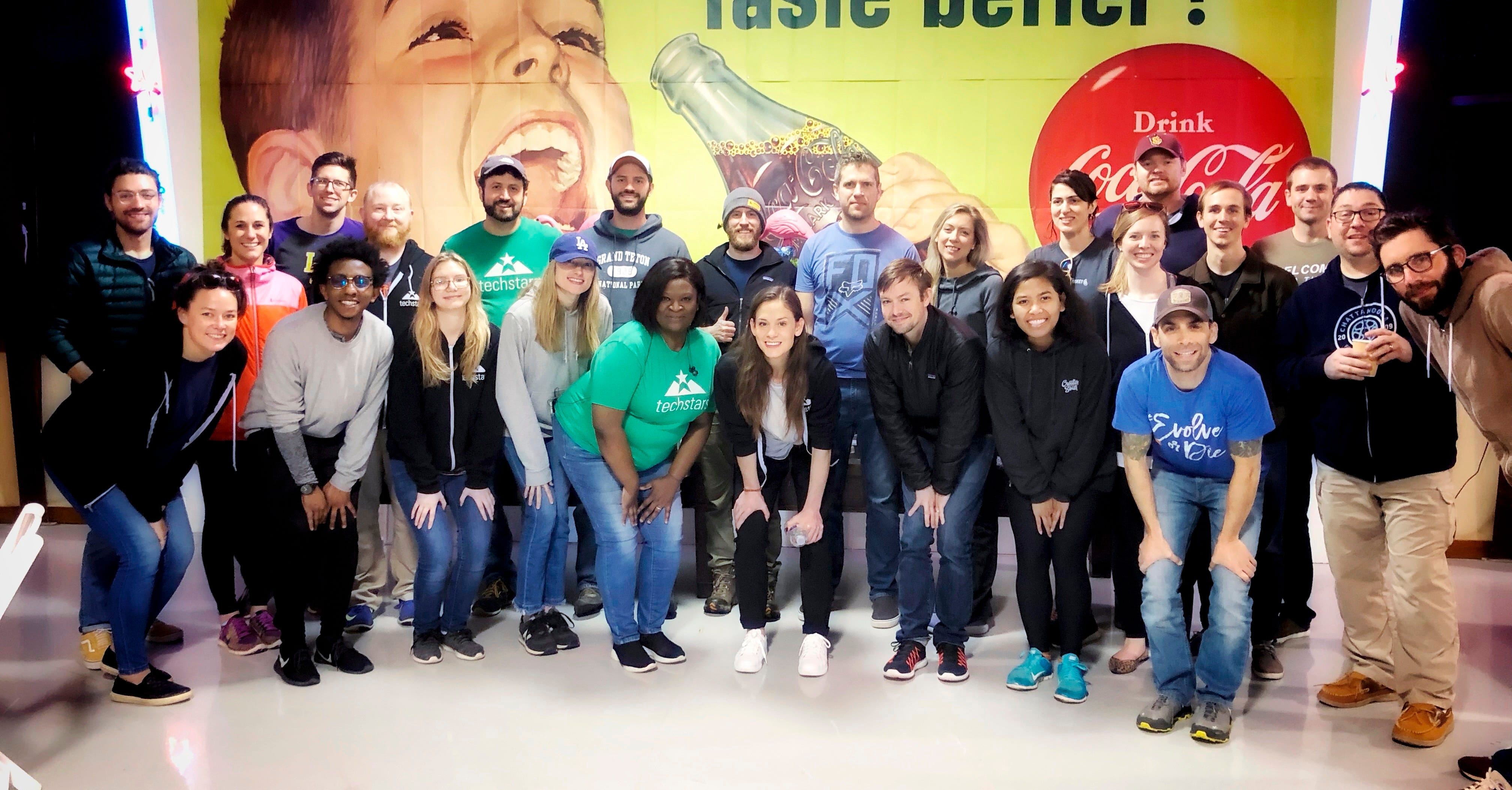
When you’re around people who are going through it too, you realize you’re not crazy, you’re not weak, you’re not failing, you’re just doing something really hard, and nobody told you it would feel like this.
The thing is, you have to be intentional about this even when you don’t have time, especially when you don’t have time, because loneliness doesn’t care how busy you are, and it will catch up to you whether you deal with it or not.
I used to resist this because I thought I was too busy, I had a company to run and clients to serve and a million things that felt more urgent than grabbing coffee with another founder, but the founders who avoid burnout aren’t the ones who work 80 hour weeks with no breaks, they’re the ones who carve out time, even just an hour a week, to connect with people who get it.
Try CEO lunches, founder coffee chats, or Slack communities where you can ask dumb questions without judgment. It doesn’t have to be a massive time commitment, it just has to be consistent because that one hour a week of connection with people who understand will give you more clarity and energy than another 10 hours of grinding alone.
The thing people forget to mention is you also need people who like you and care about YOU, not just what you’re building or how much you’re raising or what your revenue is. Those people might be other founders who understand the grind, or they might be old friends who remind you that you’re more than your company. Either way you need both. You need people who get this specific type of loneliness and people who pull you out of it entirely.
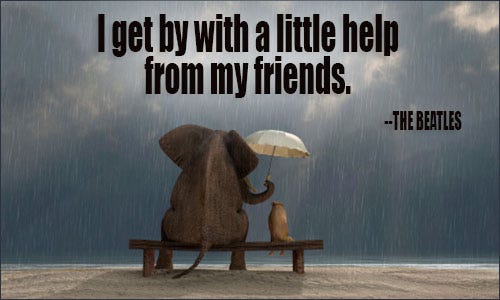
I had this moment a few years ago where I realized I’d been so focused on building and surviving that I’d let almost all my non-work friendships fade, not because I didn’t care about those people but because I kept telling myself I didn’t have time. Then, I had a week where everything felt like it was falling apart. I looked around and realized I had nobody to call who would just let me be a person instead of a founder, and that scared me more than any business problem I’d faced.
So I started by being intentional about finding something. I started saying yes to dinners with old friends even when I had work to do, I started texting people just to check in without needing anything from them, I started showing up to things that had nothing to do with business, and it didn’t fix the loneliness immediately, but over time, it reminded me that I’m allowed to exist outside of what I’m building.

I used to think I could just power through - focus more, grind harder, get more disciplined, then I’d be fine. That’s what most founders do. They treat loneliness like a weakness they need to overcome, but loneliness isn’t a lack of discipline, it’s a lack of connection, and you can’t optimize your way out of it.
I’ve seen founders who were brilliant, hardworking, and totally capable crumble because they isolated themselves. It wasn’t because they couldn’t do it, they just tried to carry everything alone, and eventually it crushed them. The ones who made it weren’t necessarily smarter or more resilient, they were just better at asking for help and building relationships with people who could actually support them, and that’s not a weakness, that’s survival.
When you stop carrying everything alone and have people who know what it’s like, you don’t have to pretend you have it all figured out. You can be honest about what’s hard and get the support you actually need which gives you perspective when you’re too deep in it to see clearly. Loneliness clouds your thinking. When you’re isolated, every problem feels insurmountable and every decision feels life or death, but connection reminds you that most of what feels catastrophic today won’t matter in a month.
You also start to actually enjoy building again when you’re not drowning in isolation. The problems don’t go away, but they feel lighter when you’re not facing them alone. Finding the people who can support you is the difference between burning out and building something sustainable with your mental health still intact. Founders who crash out don’t usually fail because the business failed, they fail because they couldn’t survive the loneliness. Community is how you stay in the game long enough to actually succeed.
“Alone, we can do so little; together, we do so much.” - Helen Keller
4. Now go:
This week, try this:
Find one founder community, Slack group, or local meetup, and join it. Show up to one event or one call, just one, and see if there are people there who are dealing with the same stuff you are. See if it feels less lonely.
Start here if you only have 10 minutes:
Text one other founder or entrepreneur right now, and ask them, “How are you actually doing with all of this?”
See what happens.
Next Tuesday: The Genius Guide to Not Building a Unicorn
P.S. When I was running founder communities, the thing that always surprised me was how relieved people looked when they realized other people felt the same way they did, like they’d been holding their breath for months and finally got to exhale.
It’s what community does. It reminds you that you’re not alone, and sometimes that’s just enough to keep going.
If this resonates, hit reply and tell me how you’re dealing with loneliness as a founder. I read every response.
Writing from Austin, still building community,
Alex