


For a while, I hated posting content.
Not because I actually hated it, but because every time a post of mine did well, my comments and DMs were filled with hate. Sometimes passive-aggressive, sometimes just directly rude.
People saying I looked like I had tons of plastic surgery. Anti-semitic or sexist comments. Saying I talked weird. Calling me dumb.
It didn’t even matter how wholesome the video or post was. There would always be something.
So one day I texted my friend Kevin Espiritu.
Kevin is the CEO and big brain behind Epic Gardening—a gardening empire with 9M+ followers across platforms and millions of dollars in revenue teaching people how to garden.
Kevin is unique because beyond being a master of content and an incredible business builder, he’s extremely insightful and grounded in how he approaches life. He cares about doing things that make him happy so over the years he has become kind of my go-to guy on these type of things.

He said something to me that stuck:
“Alex, you can only get upset about the things that you believe are true. And if you believe they are true and they STILL upset you... well that’s just a signal to look inwards.”
From that moment forward, hate comments don’t bother me. It’s like something reconfigured in my brain. Whenever anyone leaves a comment or I even get real-life feedback, I run it through the filter: “Do I believe this is true?”
Here’s how Kevin developed that mindset (and how you can too).
1. Here’s the thing he wanted:
Kevin wanted to teach people about gardening; show people how to grow tomatoes, build raised beds, start a garden from scratch. Make free content that actually helped people. That’s it.
You’d think teaching people about plants would be safe. Wholesome. Uncontroversial.
But when you have an audience, the hate always comes somehow.
People calling him fat. Saying his head’s too big. Telling him he doesn’t know what he’s talking about. Accusing him of just being there to sell stuff.
Kevin didn’t want to spend his life spiraling over comments from strangers on the internet. But more importantly, he didn’t want the hate to stop him from doing what he loved: teaching people how to grow things.
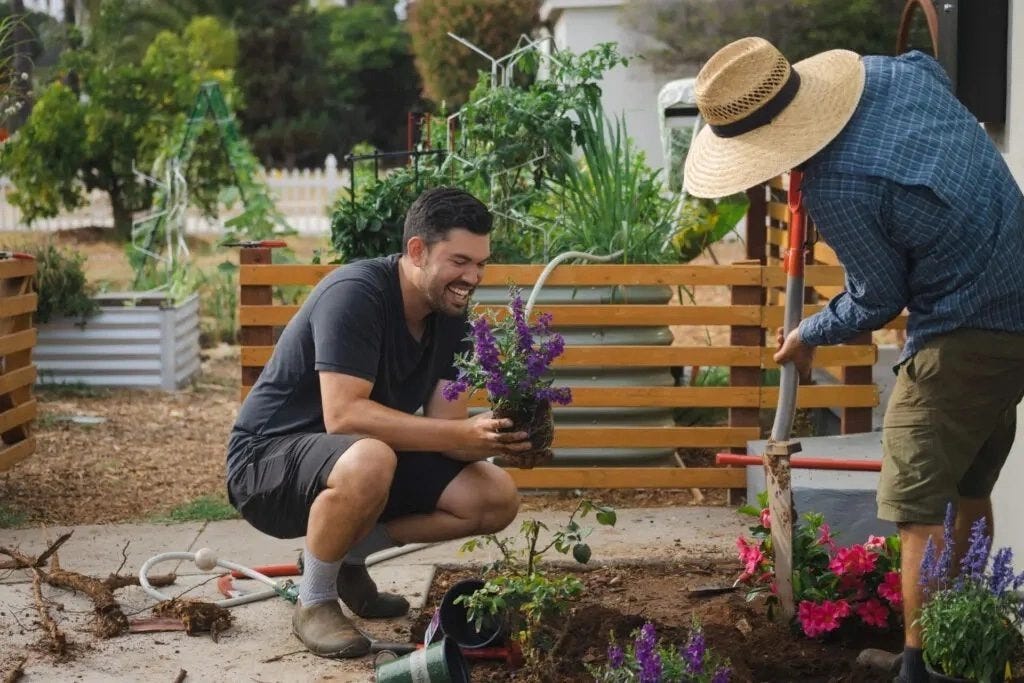
He wanted to build something meaningful and keep building it, regardless of what random people on the internet thought about him.
The key to not caring what people say isn’t about developing thick skin. It’s about believing in your long term mission more than believing what some asshole is saying on the internet.
2. Here’s how he did it:
The Framework: Is This True?
Over time, Kevin developed a simple filter—the same three-question framework I shared with you on Tuesday:
If a comment bothers you, ask yourself: Is this true?
If it’s not true, it’s easy to dismiss. Someone says you don’t know what you’re talking about when you’ve spent years studying something? Okay, move on.
If it IS true, then it’s not really about the comment, it’s about how you feel about that truth.
“The ones that bothered me were the ones that were true,” Kevin told me.
Someone commented that he was getting fat once. And instead of dismissing it, he thought: Fuck. I am actually kind of getting fat right now.
That comment stung because it hit something he already believed about himself.
So instead of spiraling or getting defensive, he’d respond with a disarming comment:
“Yeah, I am. Working on it though.”
And that was it. No drama. No spiral. Just acknowledgment and moving on.
This is how Kevin uses the framework in practice. Not as a theory, but as an actual filter every time a comment comes in.
The Three Moves He Uses Now:
When Kevin gets a hate comment now, he does one of three things:
1. He just moves on.
Most of the time, he reads it, thinks “okay,” and keeps scrolling. It doesn’t even register.
2. He uses the disarming comment technique.
Someone says something critical, he agrees with the part that’s true and adds context.
“You’re just here to sell stuff.”
Kevin’s response: “I make thousands of pieces of free content so you don’t have to buy anything. So it’s fine if I sell stuff.”
No defensiveness. Just facts. It takes the wind out of the criticism immediately.
3. He trolls back (if he feels like it).
Sometimes, if the comment is absurd enough and he’s in the mood, he’ll have fun with it.
Not in a mean way. Just in a “this is ridiculous and I’m not going to pretend it’s serious” way.
What Changed Over Time
Years ago, comments like “You’re just here to sell stuff” would have bothered Kevin.
Now? He laughs.
Because he knows the truth: He’s created thousands of hours of free content. He’s helped millions of people start gardens. If someone thinks he’s just there to sell, they’re not paying attention, and that’s not his problem.
The shift wasn’t about becoming numb. It was about becoming clear.
Clear on what’s true. Clear on what he cares about. Clear on what’s worth carrying.
3. Here’s what it cost him:
Nothing, really. Because he never let it cost him anything.
Kevin didn’t have to develop thick skin. He didn’t force himself to stop caring. He didn’t sacrifice his emotional capacity.
He just cared more about the work than the noise.
But here’s what his approach DOES require:
Loving what you do more than you hate the criticism
Kevin genuinely loves teaching people about gardening. He loves making content. He loves helping people grow their first tomato.
That love is bigger than the frustration of someone being an asshole in the comments.
You’re going to get hate regardless.
The question is: Do you enjoy what you’re doing enough to keep going anyway?
If the answer is no, the hate will eat you alive.
If the answer is yes, the hate becomes background noise.
Caring more about the long-term goal than short-term frustration
Kevin’s not building for the person leaving a mean comment today. He’s building Epic Gardening for the long haul.
He’s thinking: How many people can I help? How much content can I create? What does this look like in 5 years?
When you’re focused on the long game, the short-term assholes don’t matter as much.
The discipline to filter signal from noise
Kevin doesn’t ignore all feedback. He listens to the useful stuff.
But he’s developed the ability to quickly sort: Is this helpful feedback I should consider? Or is this just someone being a dick?
Most people can’t tell the difference. Kevin can.
Wanting to put stuff out more than you care about the hate
This is the key. Kevin’s drive to create and share is stronger than his concern about criticism.
If you care more about what people think than you care about the work itself, you’ll never make it. The hate will win.
If you care more about the work, the hate becomes irrelevant.

4. Here’s why it worked:
He cared more about helping people than about being liked
Kevin’s mission is clear: teach people how to garden. Help them grow food. Make gardening accessible.
That mission is bigger than any individual comment. When you care deeply about what you’re building, individual opinions matter less.
He never tried to build thick skin, he just focused on the work
Kevin didn’t set out to “not care” about hate comments. He just cared MORE about creating good content.
It’s not about building armor. It’s about building something you love so much that the armor isn’t necessary.
People will always have opinions, he doesn’t ignore them, he filters them
Kevin doesn’t dismiss all feedback. He’s not walking around saying “fuck everyone’s opinion.”
He listens, but he’s clear on the difference between:
Useful feedback that helps him improve
Random noise from people projecting their stuff
Most people treat all feedback the same. Kevin knows better.
You’ll get hate regardless, might as well enjoy what you’re doing
This is the key insight: The hate is coming whether you care about it or not.
If you build something visible, people will criticize it. That’s just the reality.
So your only real choice is: Do you love what you’re doing enough to keep going anyway?
If yes, you’ll be fine. If no, you’ll quit.
Kevin loves teaching about gardening more than he hates the occasional asshole comment. So he keeps going.
He’s playing the long game
Kevin’s not optimized for avoiding criticism today. He’s optimized for building Epic Gardening for the next decade.
When you’re focused on the long-term goal, the short-term frustrations become irrelevant.
Someone says something mean? Okay. He’s still going to help millions of people start gardens. That matters more.
5. Here’s what he avoided:
He didn’t confuse “not taking it personally” with not caring
This is the trap I talked about on Tuesday: people think “not taking it personally” means becoming cold or detached.
Kevin didn’t do that. He still cares about his work. He still cares about helping people. He just doesn’t let random strangers’ opinions dictate his self-worth.
He didn’t ignore all feedback
He identifies what’s real vs. what’s not and adjusts accordingly.
There’s a difference between useful feedback and random hate. He can tell the difference.
This goes back to the framework: Is this true? Does it come from someone whose perspective I value? Is it worth addressing?
He didn’t use it as an excuse to avoid accountability
If multiple people are saying the same thing, Kevin doesn’t just dismiss it as “not taking it personally.”
He looks at it: Is there a pattern here? Is this something I should address?
“Not taking it personally” doesn’t mean ignoring valid criticism. It means not carrying the emotional weight that isn’t yours.
He didn’t become defensive
Most people’s instinct when criticized is to defend, explain, justify.
Kevin just doesn’t. He either agrees with the true part, or he moves on.
No essays. No explanations. No trying to convince strangers he’s a good person.
He didn’t stop being himself
Some creators change who they are to avoid criticism. They soften their edges, play it safe, try to be palatable to everyone.
Kevin didn’t do that. He kept teaching gardening the way he wanted to teach it. If some people didn’t like it, that was fine.
He didn’t spiral or ruminate
The biggest trap with hate comments is the spiral. You read one, then you can’t stop thinking about it. You replay it. You imagine responses. You wonder what that person thinks of you.
Kevin skips all that. He reads it, processes it (or doesn’t), and moves on.
His advice if you’re drowning in hate comments?
“If you’re drowning in it, there’s probably a reason. You’ve got to look at yourself.”
Not in a “you deserve it” way. In a “what are you believing about yourself that’s making these land?” way.
6. Now go:
This week, try Kevin’s approach:
Next time you get a comment, criticism, or feedback that stings, ask yourself:
Is this true?
If it’s not, move on. Don’t think about it again.
If it IS true, ask: Does this bother me because I’m insecure about it? Is it something I want to change?
Then decide: Am I going to work on this, accept it, or let it go?
Bonus: Kevin’s Three Moves You Can Steal
Just move on. Most comments don’t deserve your energy. Read it, think “okay,” keep going.
Disarming comment technique. Agree with the part that’s true, add context, take away the fight. Example: “Yeah, I do sell stuff. I also make thousands of hours of free content. Both can be true.”
Troll back (if you feel like it). If the comment is absurd and you’re in the mood, have fun with it. Don’t take it more seriously than it deserves.
Next Tuesday: The Genius Guide to Becoming More Charming
P.S. If you want to learn how to grow literally anything, check out more of Kevins products at epicgardening.com.
If this resonated, hit reply and tell me how you handle criticism. I read every response.
Writing from Austin, thinking about how absurd it is that people leave hate comments on gardening videos,
Alex